Mexico to French Polynesia
Tags: French Polynesia, Gambier Islands, Puerto Vallarta, Punta Mita, Taravai, sailing
Date: May 9, 2026
Our last time in Mexico was mostly spent preparing the boat for a long voyage and that includes buying lots of food. Here is part of our provisions:
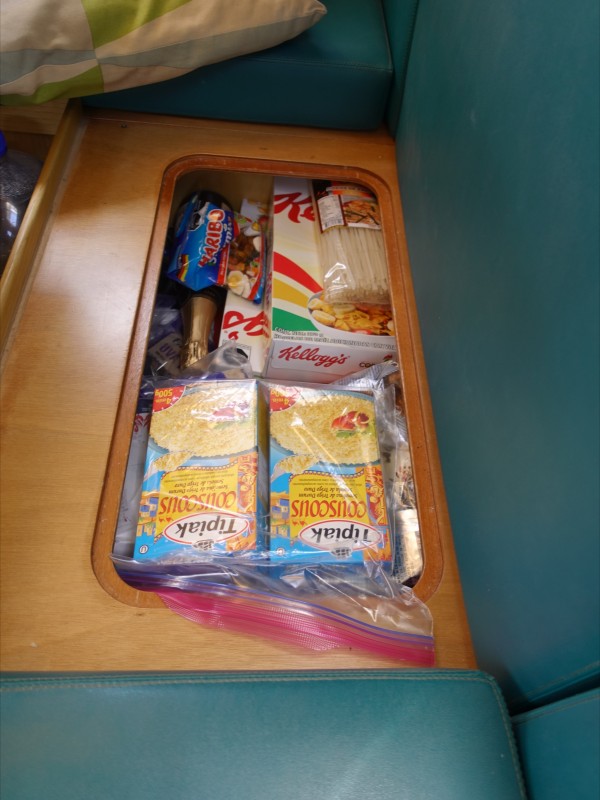
Note the bottle of sparkling wine that we bought to celebrate our arrival.
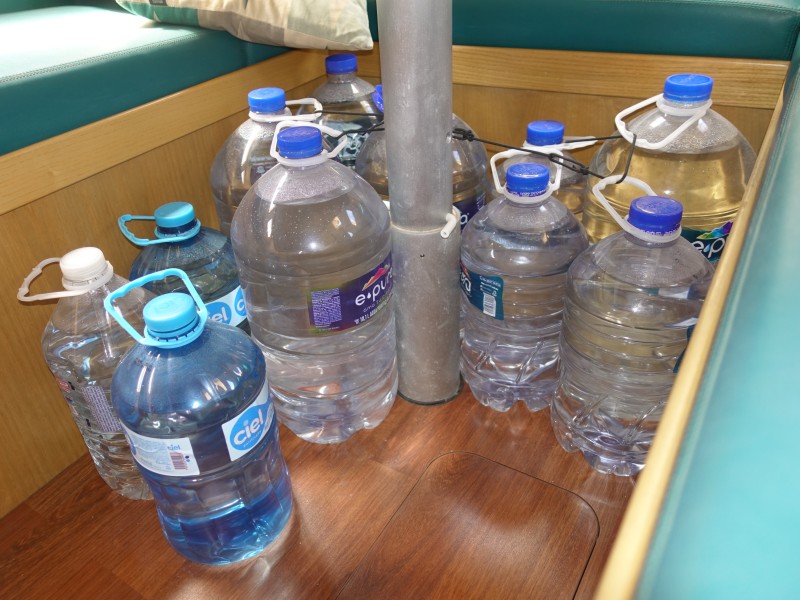
We have a reverse osmosis apparatus on board to make fresh water out of sea water. However, we brought some emergency drinking water in case the watermaker broke and/or the water in the tanks would become contaminated:
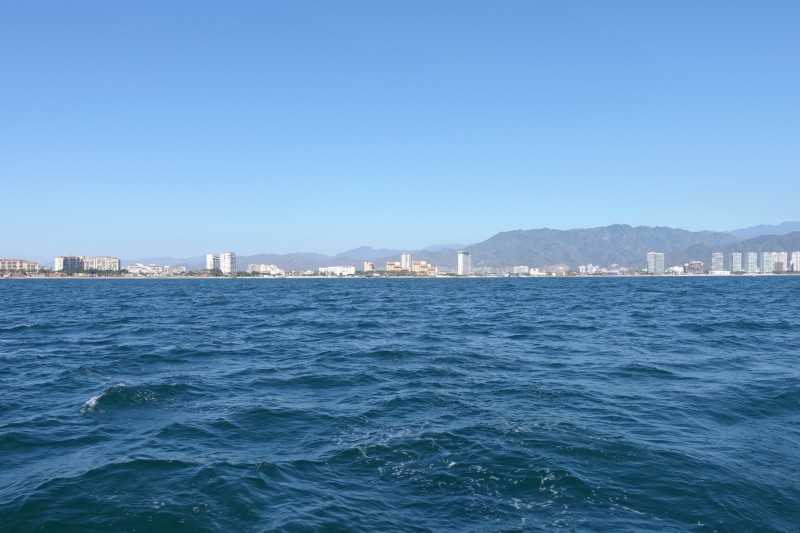
We cleared out with the authorities in Puerto Vallarta and a couple of hours later we headed out of the port to spend the last night in Mexico at an anchorage off Punta Mita. Here is a last view of Puerto Vallarta:
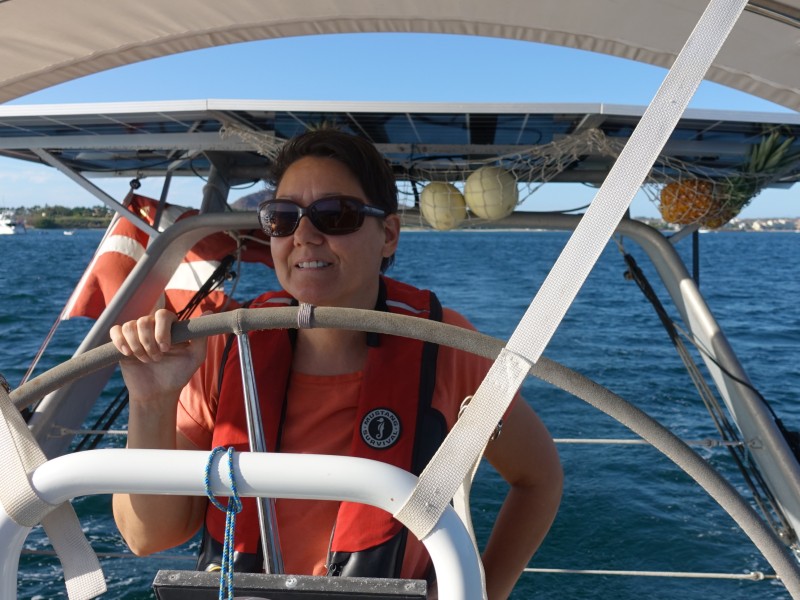
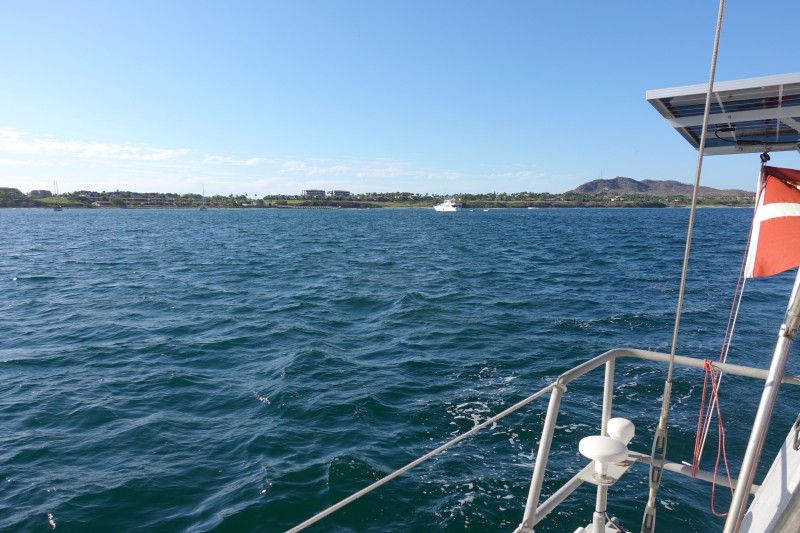
Next day we left the anchorage at Punta Mita in the afternoon to head into the Pacific:
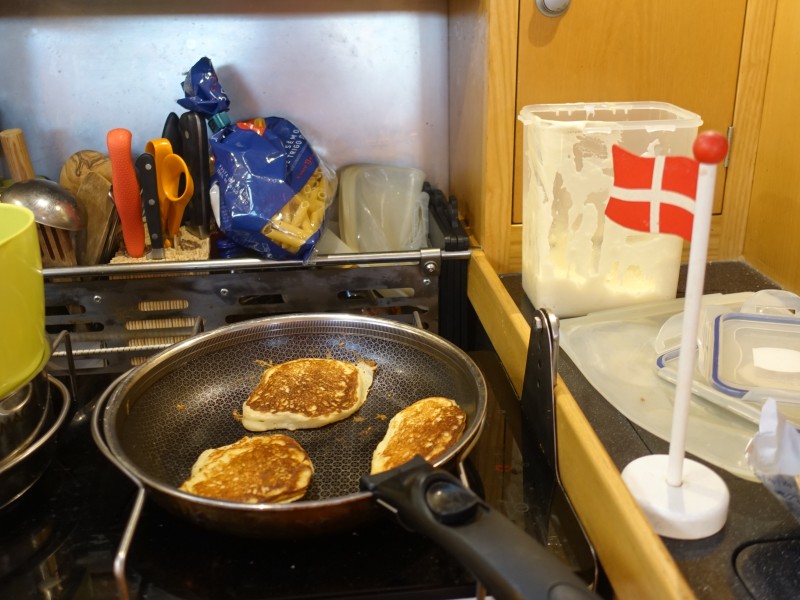
A couple of days into the passage it was Bjarne's birthday and Felicie made pancakes in the early morning before Bjarne was woken up for his morning watch:
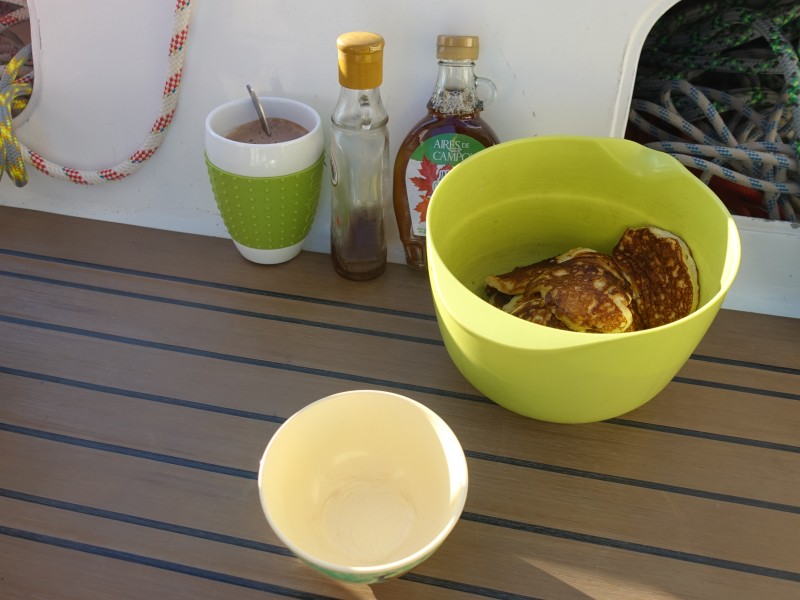
Is was a calm day and we had the pancakes with hot cocoa out in the cockpit:
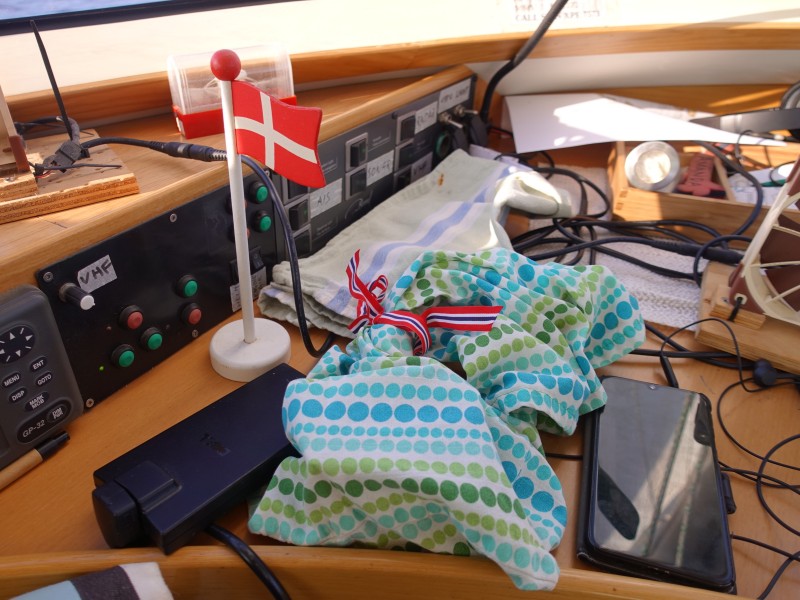
There was also a small wrapped present for Bjarne:
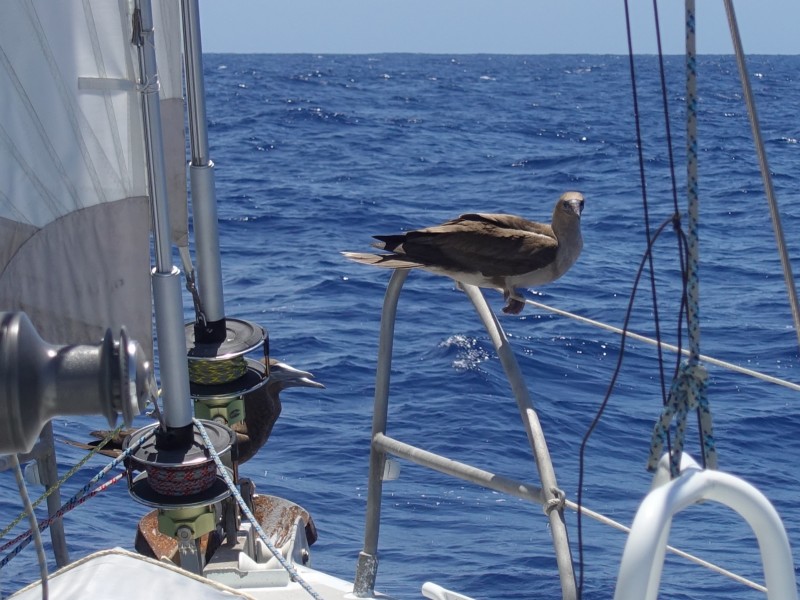
Also, a couple of days into the trip these boobies showed up and started to land on the bow of the boat. First there was one and is was kind of funny but then there were two, then three and at the end we had five boobies perched on the anchor and lifelines in the front of the boat and they were pooping all over it. Here we have a picture with three of them:
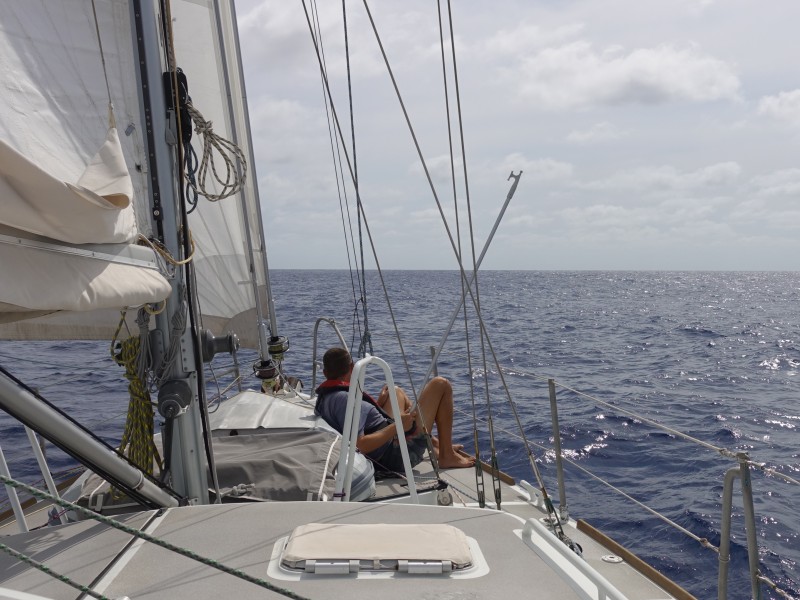
We decided to try to get rid of them before they became permanently installed but it was not easy because they weren't at all afraid of us. Here is Bjarne sitting with the boat hook to push them away when they try to land:
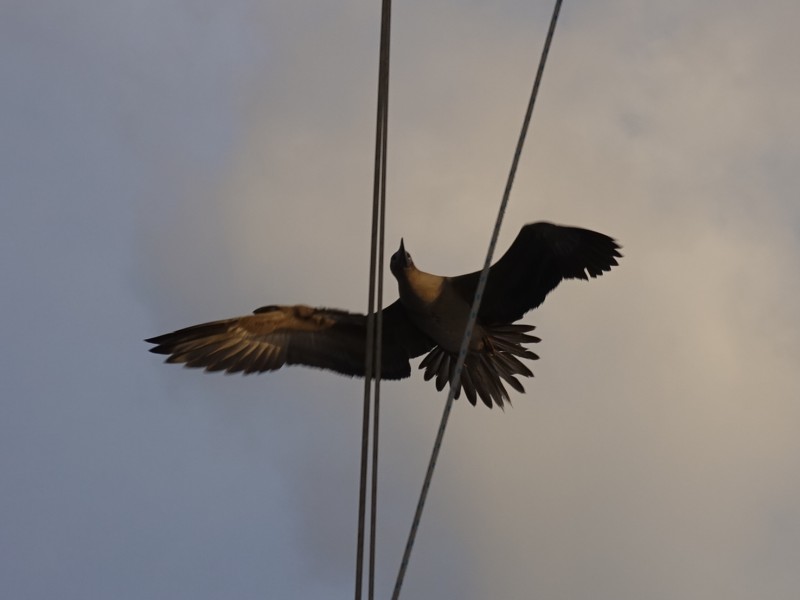
Some of the boobies were also keen to land in the mast but fortunately they never succeded:
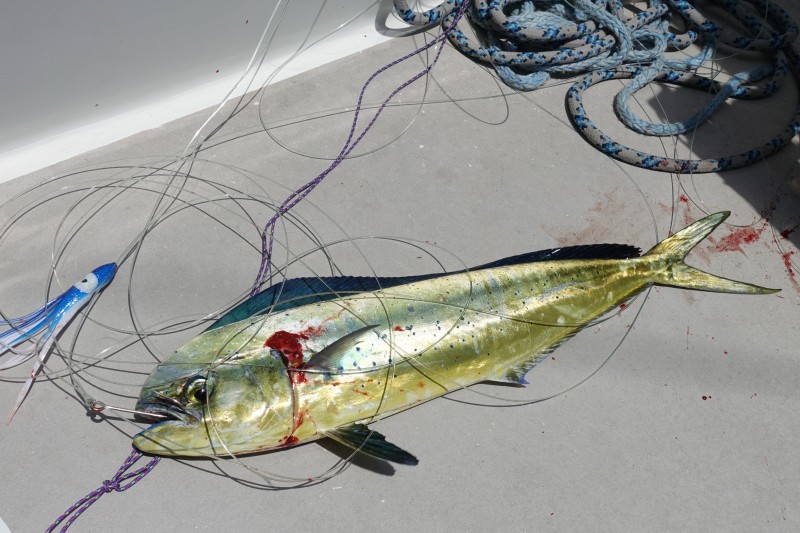
The sea was quite rough most of the time so we didn't fish much but still managed to catch a small mahi mahi:
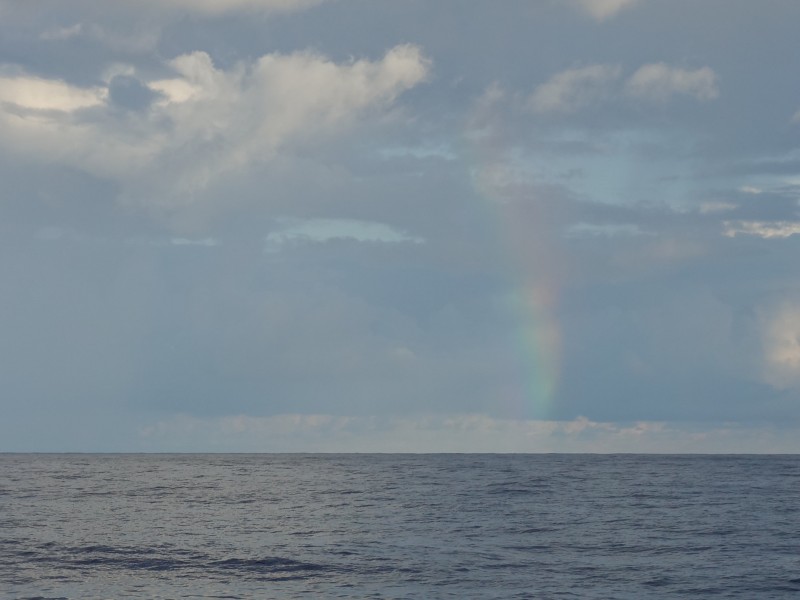
We did not take any pictures of sunsets or sunrises in this trip but here is a faint rainbow:
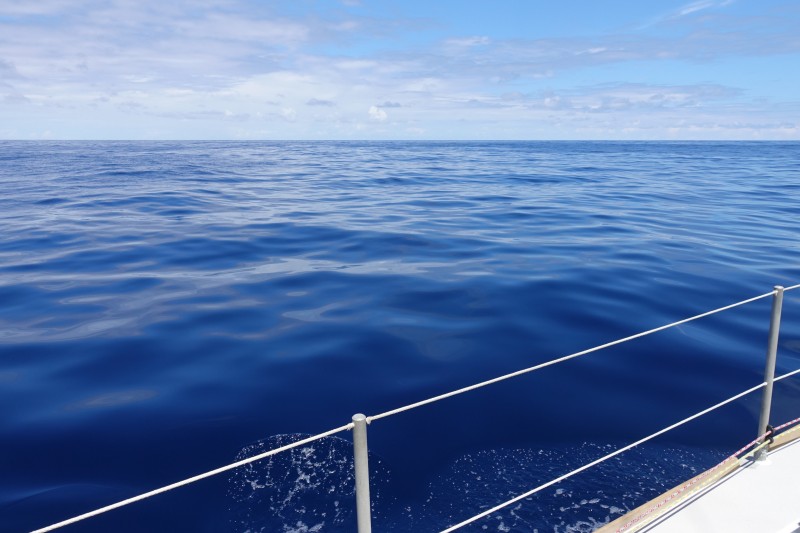
The deep blue ocean on a very calm day:
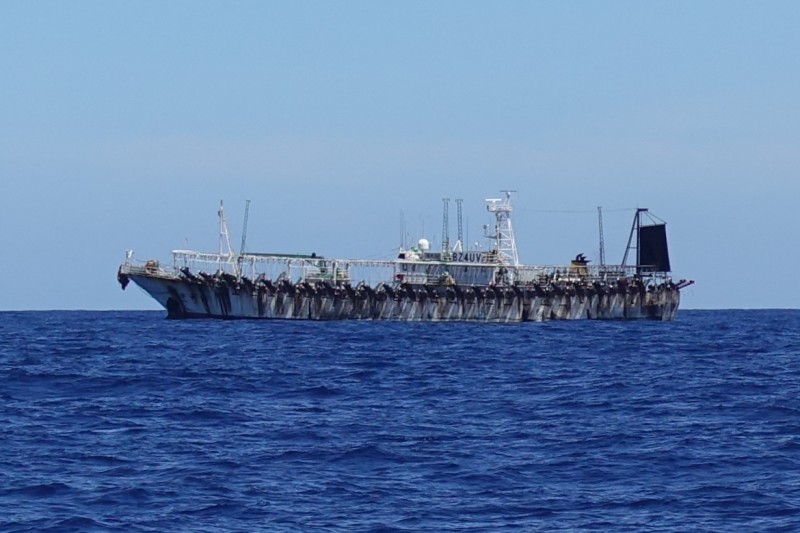
Just before we crossed the equator we passed by a huge fleet of big Chinese fishing boats fishing on a thousand km long line between the Galapagos and the Marquesas. There must have been hundreds of boats and they all looked like this:
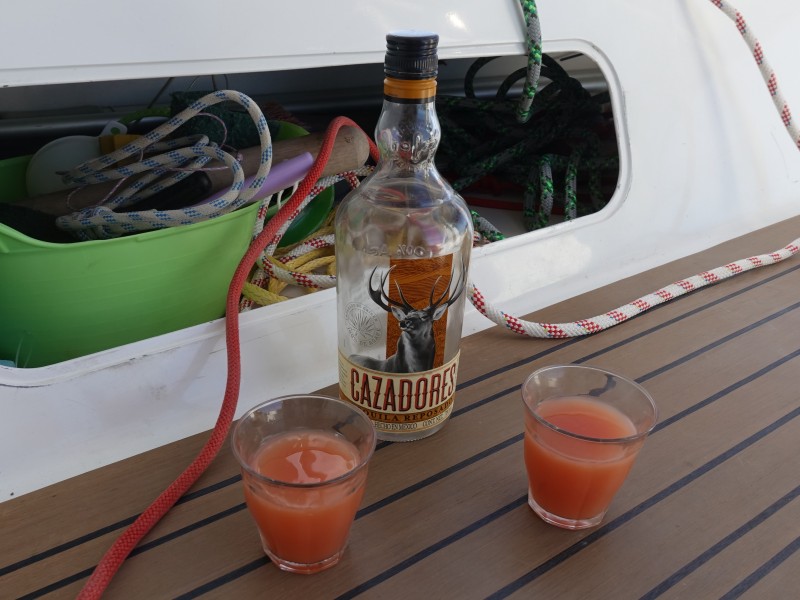
As we crossed the equator we made a toast of tequila and grapefruit juice and poured the rest of the tequila into the ocean for Neptune:
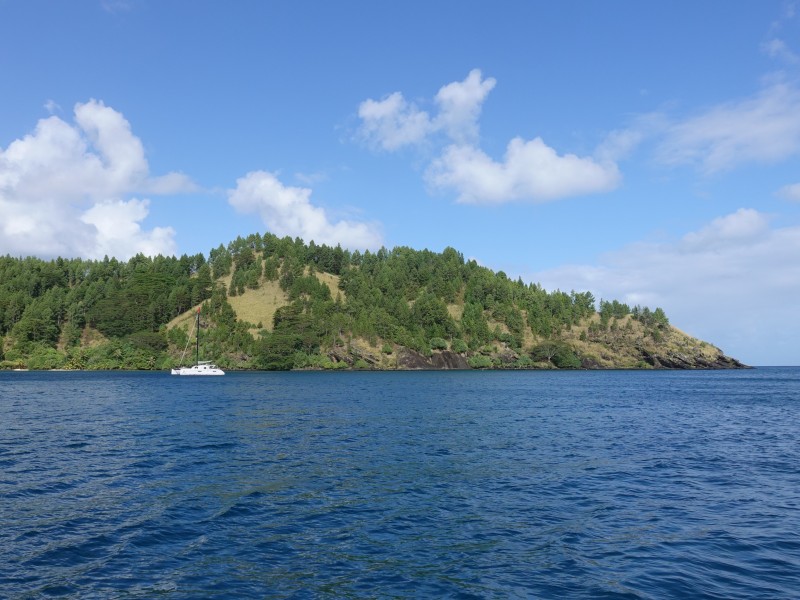
After 27 days at sea we arrived at the Gambier Islands in French Polynesia and anchored in a well protected bay off Taravai Island alongside another sailboat:
Here is a map of the trip:
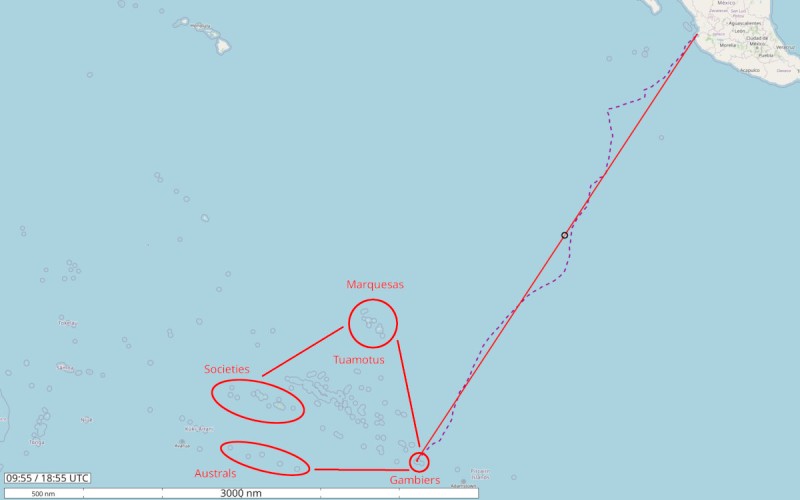
The red line starting in Mexico is the planned route while the dashed purple line is the actual route. The swerve to the west in the beginning was due to getting wind from behind that turned over some days. It is not always efficient or easy to sail dead down wind, so we had the wind coming a bit from the side and then swapped sides to get back to the red line.
In much of this area the prevailing trade winds are mostly from the east and the current also comes from the east. Around equator (marked by the little black circle) the wind usually dies in a belt called the doldrums. In this area, the current goes east (the equatorial counter current). That is evident on our track just after the equator.
French Polynesia consists of five regions marked on the map. The Gambier Islands is just one big atoll with several islands. It is separate from the Tuamotus for several reasons, both cultural and geological. The Gambier Islands are tall volcanic islands while the Tuamotus are low atolls. The Polynesian language spoken in Gambier is also different from the language spoken in the Tuamotu Islands. Most people also speak french.
In the top left of the map you can see Hawaii and going west from French Polynesia, the countries are the Cook Islands, Niue (one small island) and then Tonga. Pitcairn Island is located east of the Gambier Islands. Pitcairn is a British overseas territory with a population of 35 people who are mostly descendants of the mutineers from Bounty. The mutiny happened in April of 1789 and after some time in Tahiti, some of the mutineers along with some Tahitians settled on Pitcairn in January of 1790.