Hao
Tags: French Polynesia, Hao, Tuamotu, food, sailing
Date: August 15, 2026
We finally left the Gambier Islands and sailed four days and nights to reach our first atoll in the Tuamotu archipelago, the atoll of Hao.
An atoll is a ring-shaped island encircling a central lagoon. The ring-shape may be low lying coral reef with waves washing over it or actual islands with vegetation, often it is a mix. For an atoll to be an interesting destination for us there needs to be a pass i.e. an entrance from the ocean outside into the lagoon that is wide and deep enough for the boat to pass from the outside to the inside. Hao has one such pass but as with most passes into atolls, the changing tide means that a lot of water needs to move into the atoll as the water rises and than out again when the water falls.
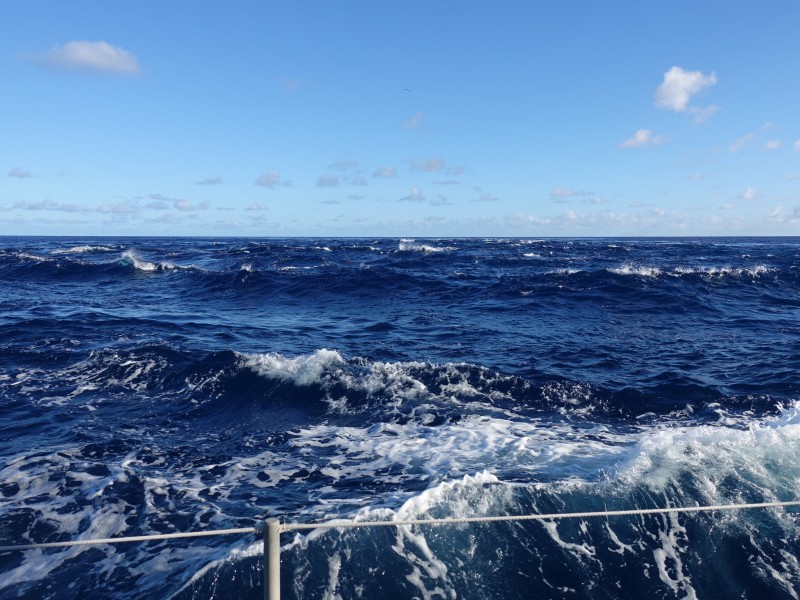
The only place that exchange is possible at Hao is in that one pass, so there are very strong currents going in or out of the pass following the rise and fall of the tide. If, in addition to the tide, there are high swells from the ocean constantly washing over the coral reef into the lagoon, the current out of the pass may be too strong for our boat to sail against it even when the current is at its lowest. That is exactly what happened when we arrived at Hao in the morning of our fourth day at sea: We were unable to enter the lagoon! According to the forecasts, the wind-driven swells were supposed to subside a bit the next day so we decided to wait 24 hrs and then try to enter again. Unfortunately, there was no place to anchor on the outside of Hao so we spent the next 24 hrs sailing back and forth on the lee side of the island continuing our 4-hour watches. The next day at noon we tried to enter again and made it through with 4 knots of current against us. We anchored right inside the pass, off to the side, and out of the current.
We spent three weeks in Hao, alternating between anchoring out in the lagoon for snorkeling on the coral reefs:
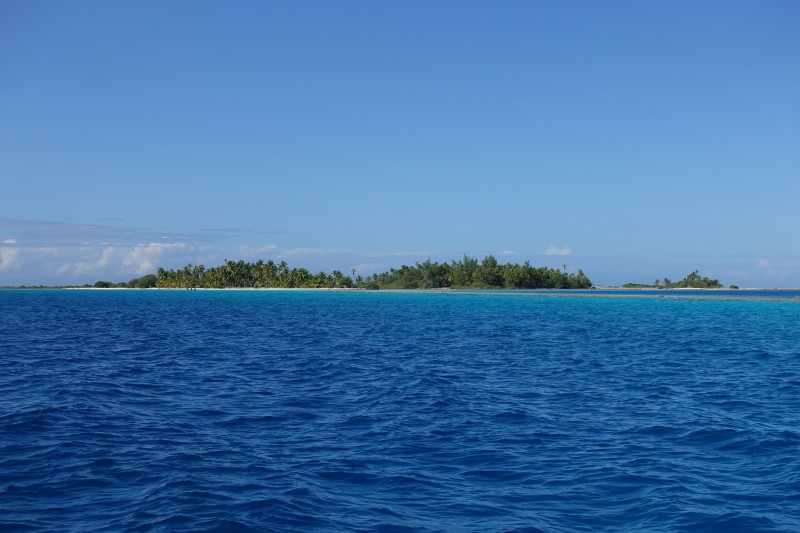
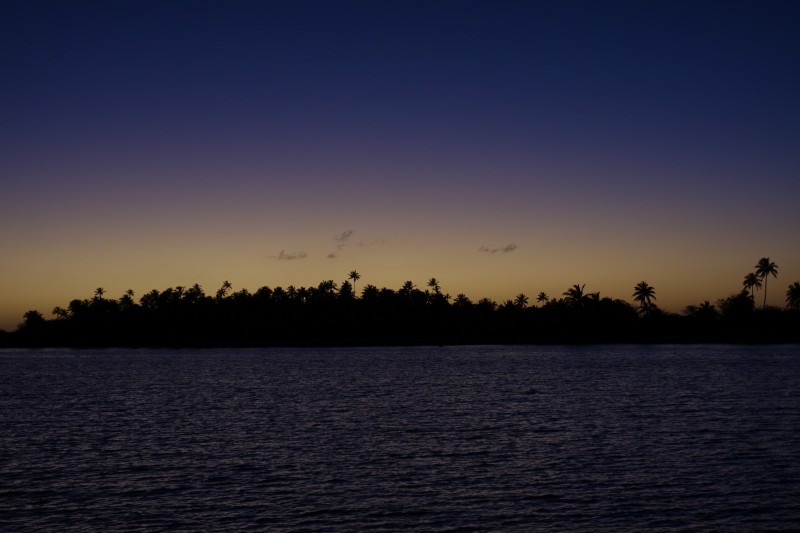
...watching night fall over palm covered islands:
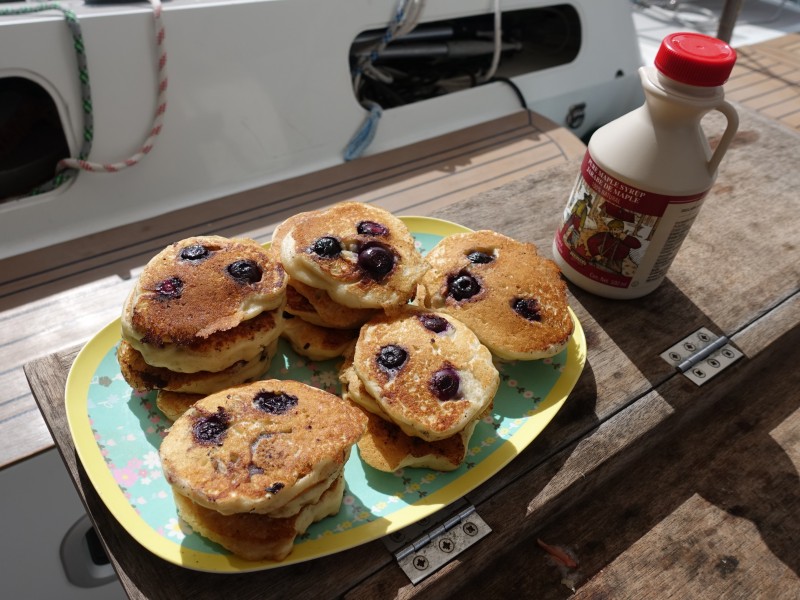
... eating blueberry pancakes with maple syrup we brought from Mexico:
... and visiting Otepa, the village on Hao, for provisioning, doing laundry, getting rid of trash and other practical things. At Otepa there is an old concrete harbor where we could tie up the boat and have easy access to the village:
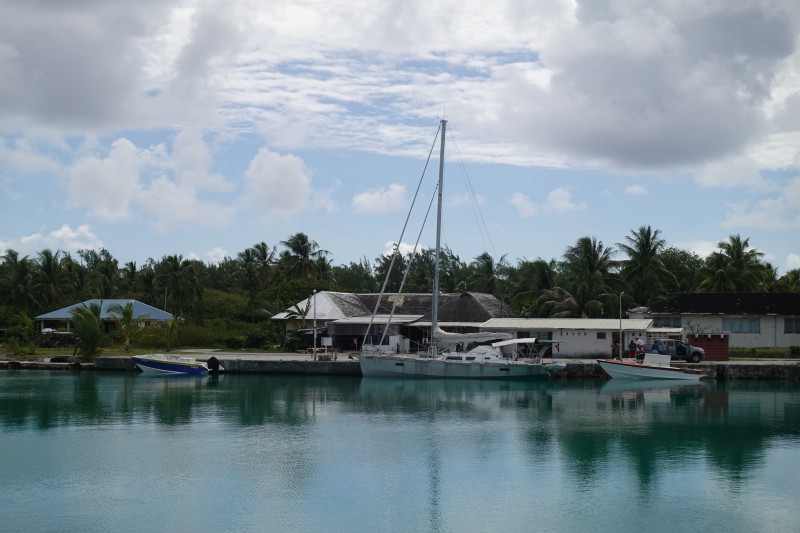
The old harbor is part of the military past of Hao, since Hao used to house the military support base during the years of nuclear testing in nearby Mururoa between 1966 and 1996. After the nuclear tests was abandoned, the military left Hao. They left behind lots of buildings, an airport with an unusually long runway (3,380 m), permitting landing and takeoff of the heavy aircraft transporting materials for the nuclear tests, and finally they left the little harbor where we docked Amanda.
Below is a monument commemorating the military casualties, both French and Polynesian, during the time of the military base at Hao:
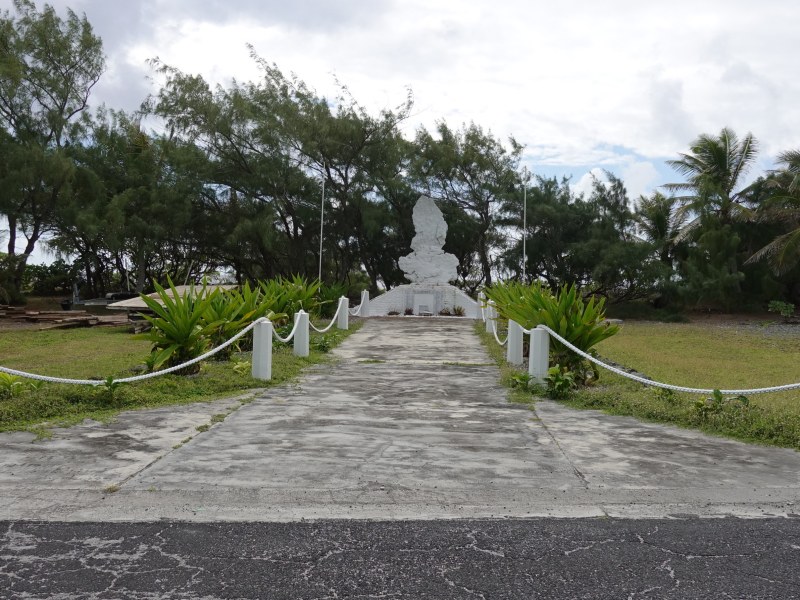
When the base permanently closed in 2002 and all the soldiers left, the locals who had worked on the base were left without jobs and it seems like they are still struggling today 25 years later. Some people grow coconuts to make copra, which is the sun-dried flesh of the coconut from which coconut oil is extracted.
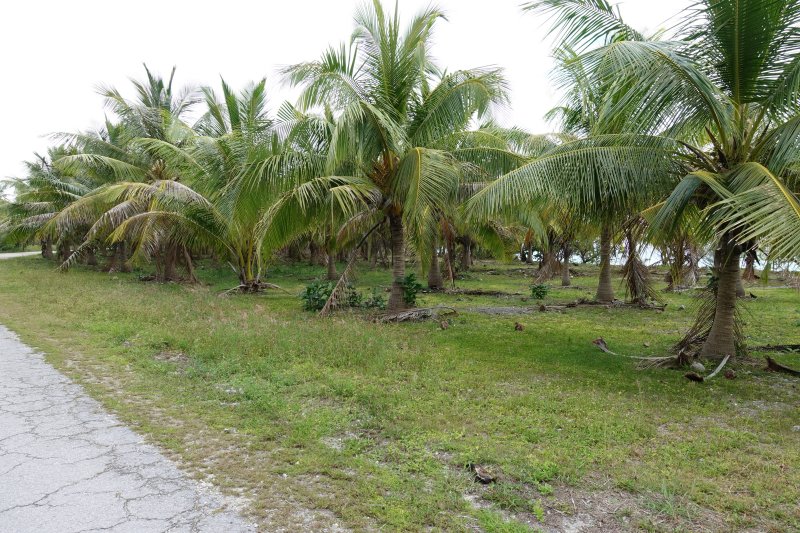
There seems to be some infrastructure projects going on, new power cables were being buried, a new city hall has been built (see further below) and several new residential buildings constructed. Here is one of these new houses:
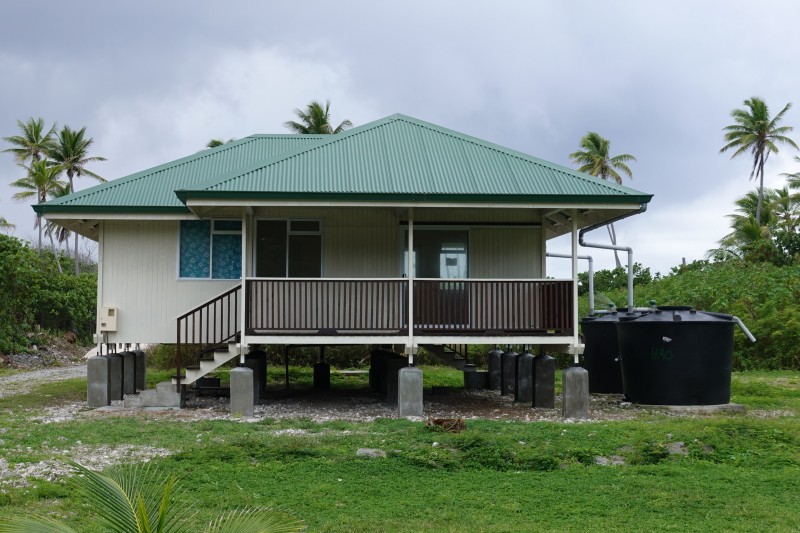
All the new builds are on stilts - maybe for protection against flooding during a cyclone. Note also, the tanks for collecting and storing rainwater.
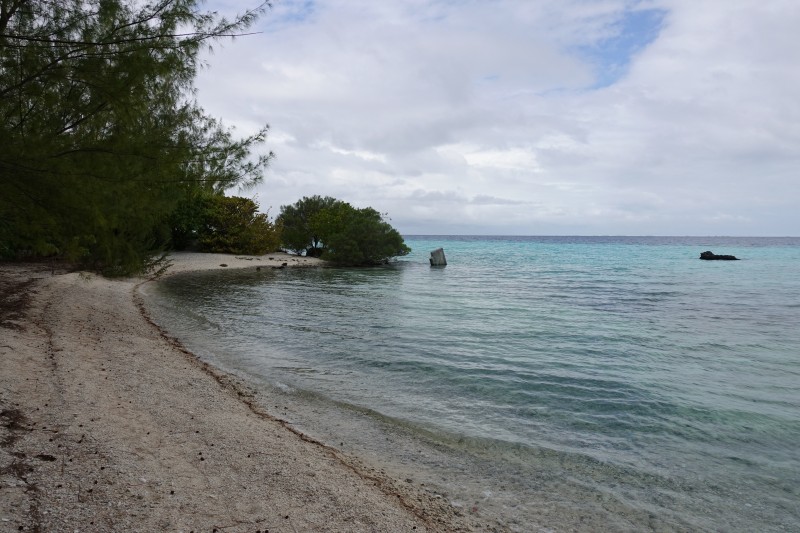
The beach on the lagoon side:
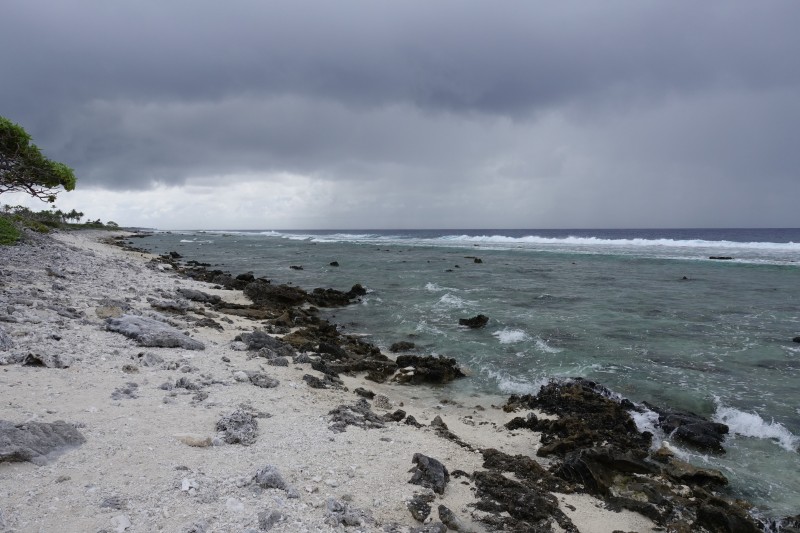
The beach on the ocean side:
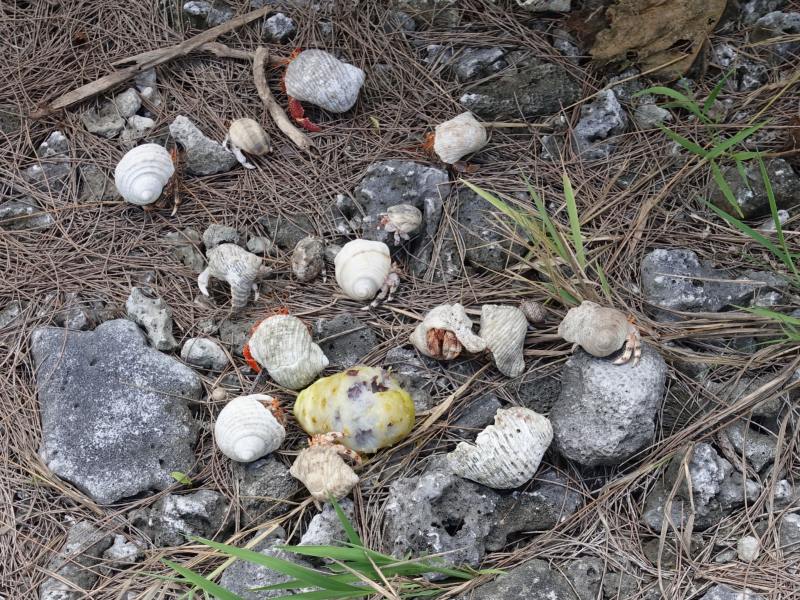
On one of our short hikes — there is just one road, so you can follow the road to the north of the village or to the south of the village — we saw a bunch of hermit crabs having a feast around a fallen fruit:
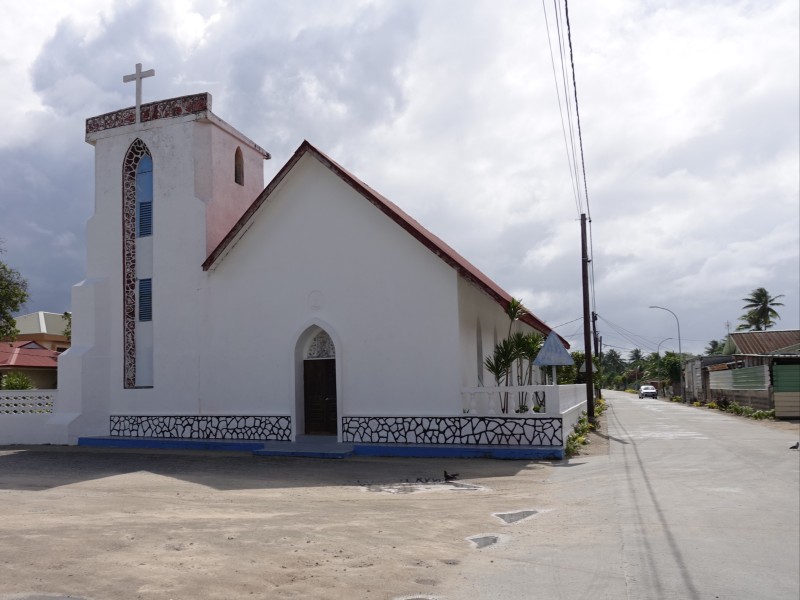
In town there is the very well maintained Eglise Saint-Pierre de Otepa:
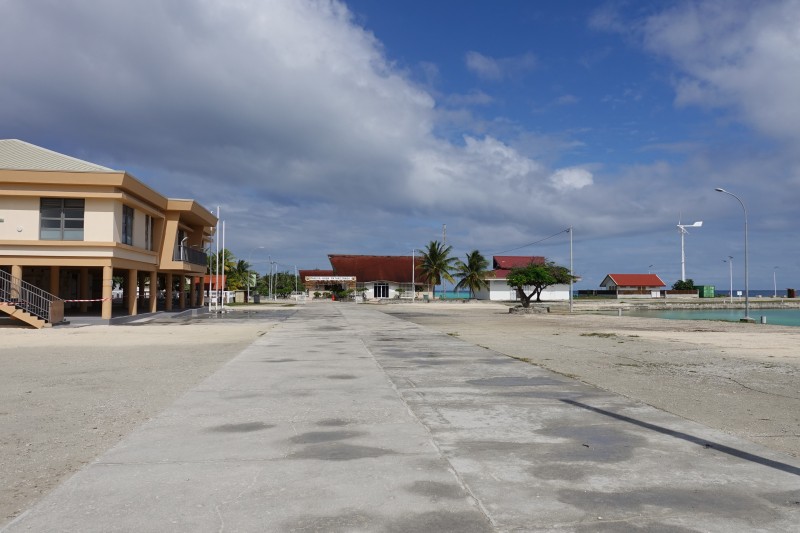
This is the building that temporarily houses the municipal administration and to the right of it is the very discreetly signed police station:
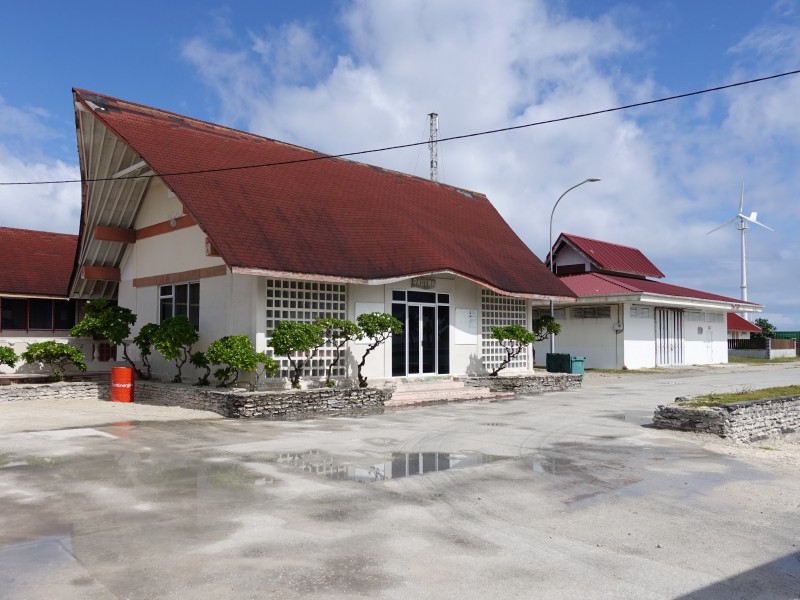
Looking towards the same building through the sign announcing the annual traditional dance festival in the Pa'umotu language (Tuamotuan). It means something along the lines of "The Festival of the Clans" and is the equivalent of the festival we attended in Rikitea. It was just over in Hao when we arrived.
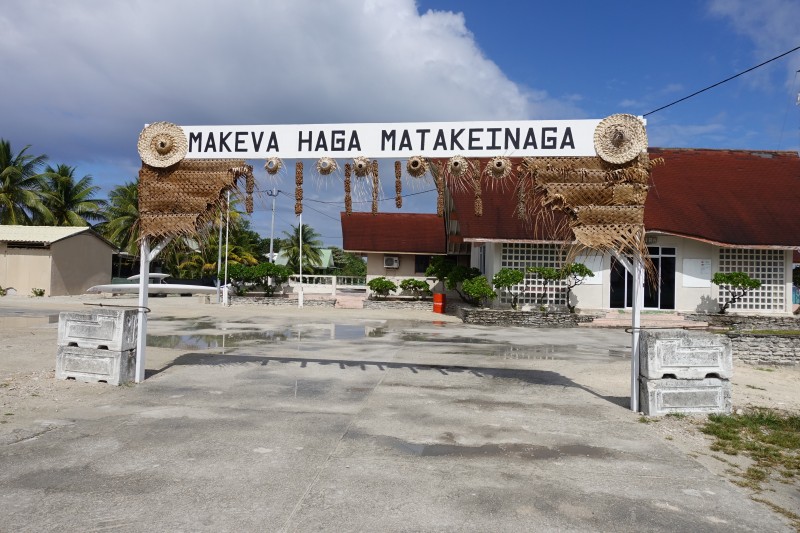
The new city hall and municipal administrative building almost ready for use. We were told they would move in shortly:
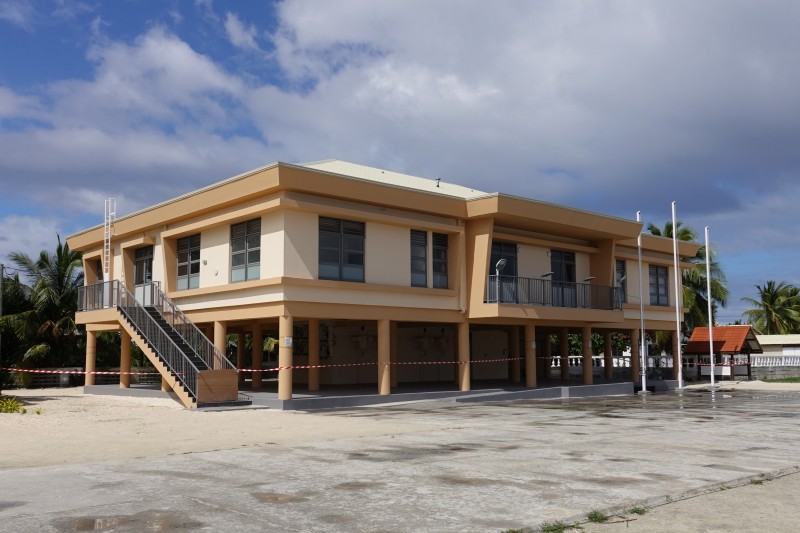
The post office:
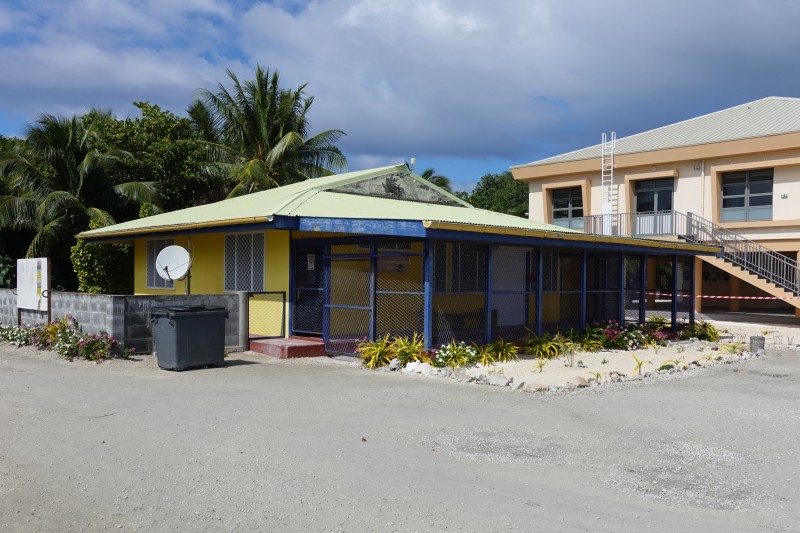
A view over the inner part of the town harbor with the (not visible) post office to the left, the new city hall and in the far background the existing city hall:
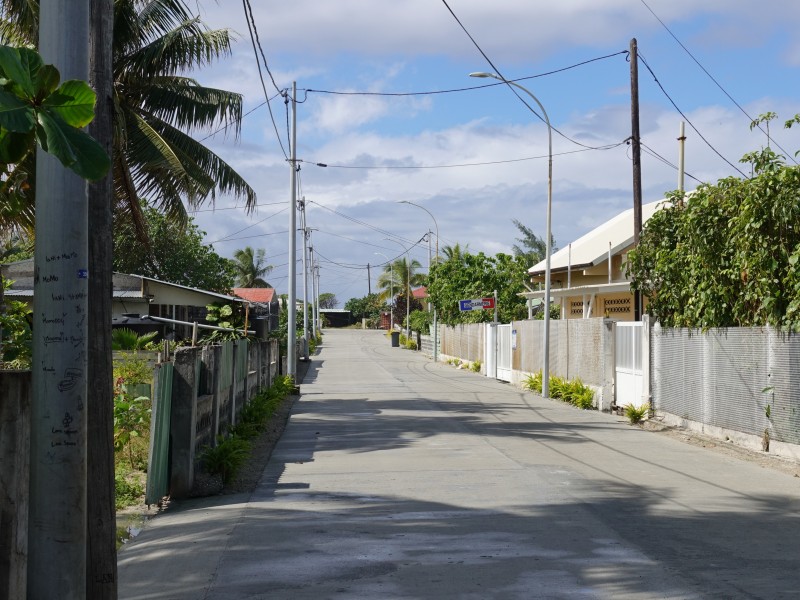
A street in Otepa. Note the classic French entrance sign to the Gendarmerie on the right side of the road:
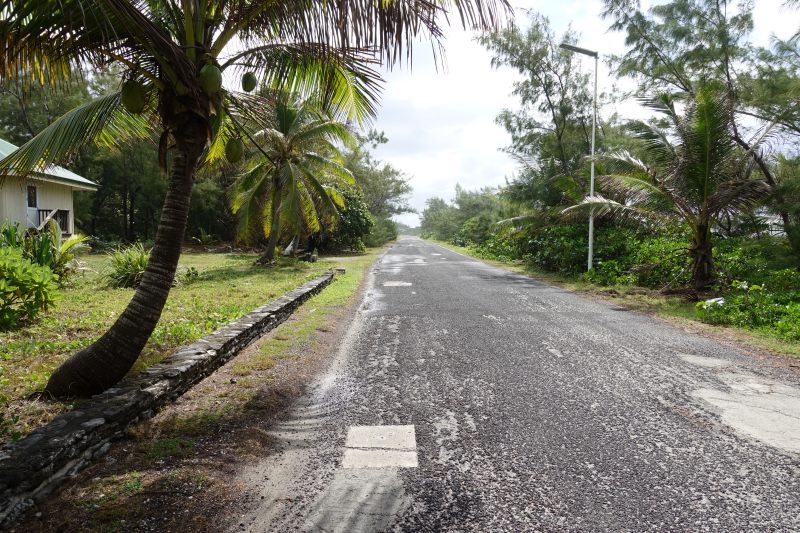
The main road leading out of town towards the airport and towards the small harbor where Amanda was moored:
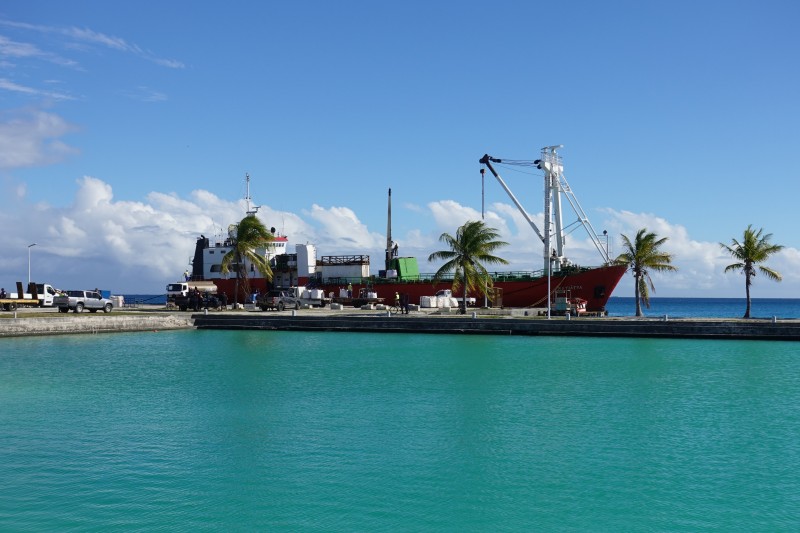
Supply boats arrived several times during our stay at Hao, always followed by a lot of activity at the town dock:
Hao has one of the largest secondary schools (college) in the Tuamotus and kids from the other atolls come to Hao to attend the boarding school. School restarted after the summer holidays in mid-August and the children were brought to Hao from all over the place in the boat below that docked right next to us:
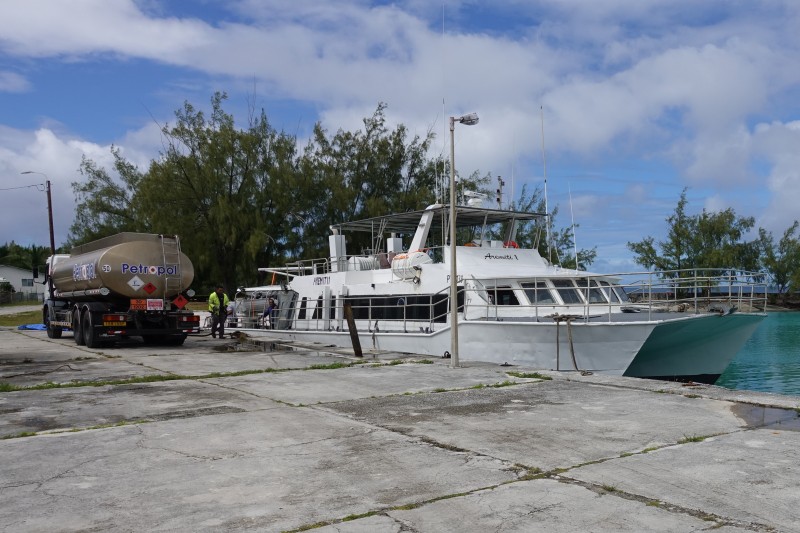
There was a whole delegation of teachers, the police and other locals to welcome them and put them and their suitcases into a bus to take them to the school and their lodgings. The boat stayed the whole day in the little harbor and was also refueled.
On one of our last days in Otepa we walked North from the village along the road towards the airport. Just before the runway we arrived at this enclosed area:
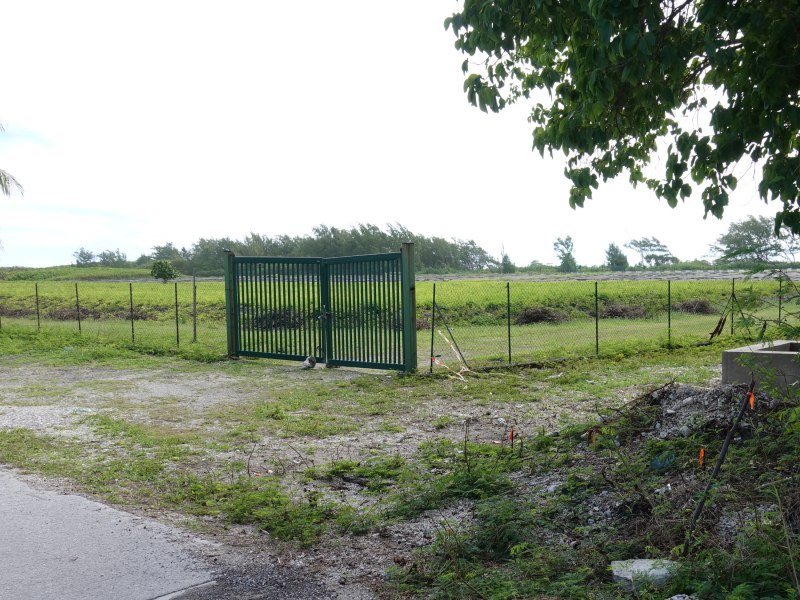
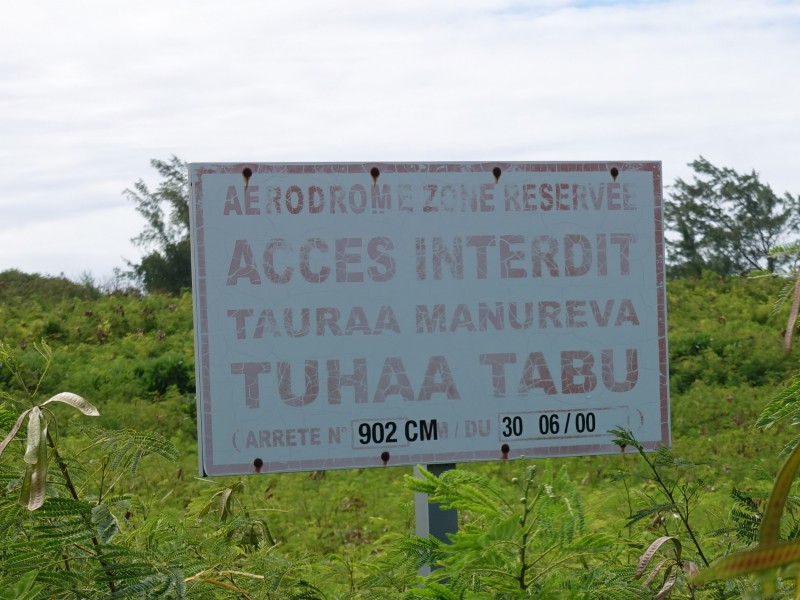
There was a couple of signs telling us to stay out. Here is one of them, note the wording in Tuamotuan below the French version where it is obvious to see that "tabu" means "forbidden":
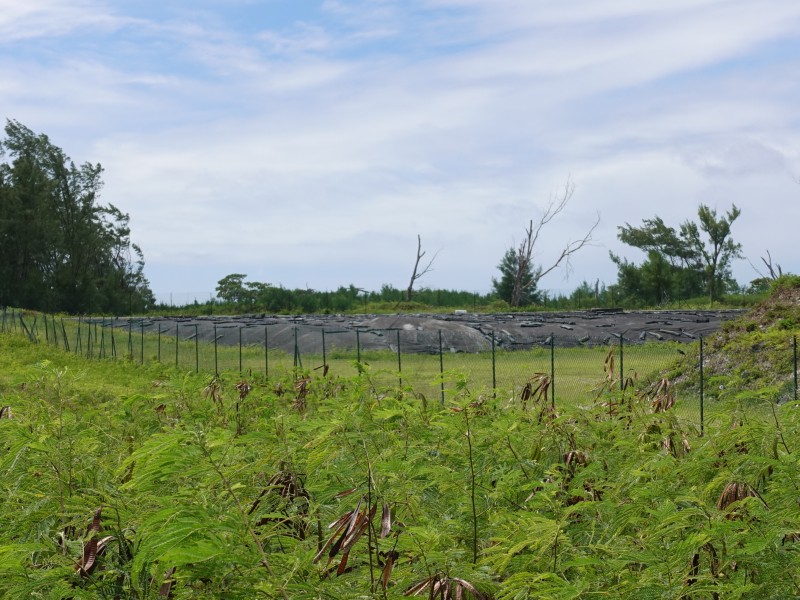
What is enclosed in the forbidden area is the site that was used to decontaminate airplanes after flight missions during the nuclear testing. When the military closed down the base, they paved the site to contain the contaminated soil and fenced it in to keep people out:
Then we arrived at the runway (to the right in the picture):
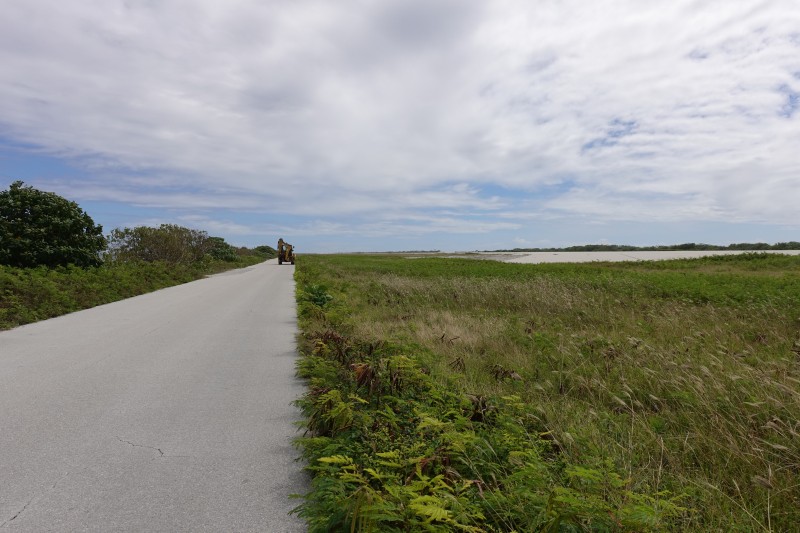
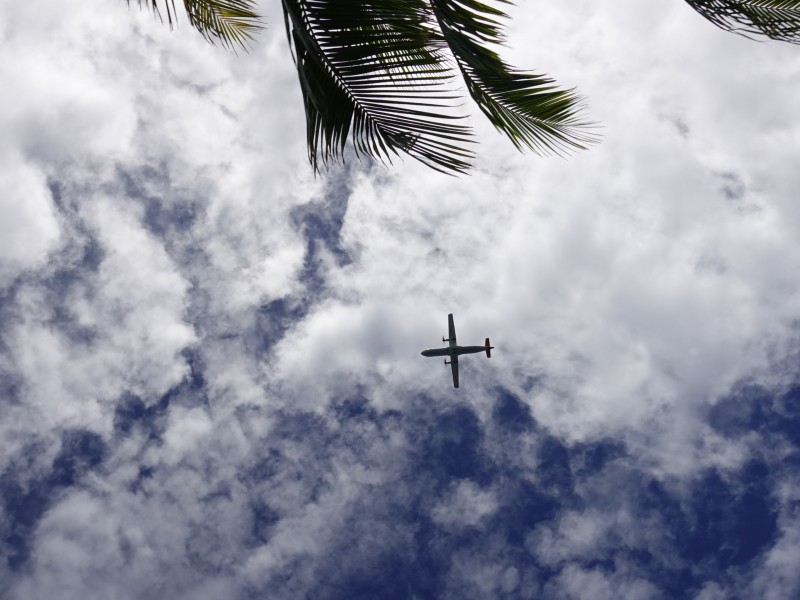
One of the near daily planes was taking off as we walked by:
Like when we entered the lagoon at our arrival at Hao, we had to time the exit through the pass when we left Hao. We had to get out at a time where the in-going current was not too strong for us to sail through or at a time where the outgoing current was not so strong that we would lose control of the boat. Bjarne timed it well and we were able to exit without any difficulty, although the water is never really calm in the pass: